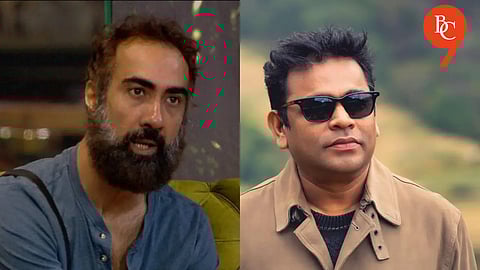


Actor Ranvir Shorey has pushed back against composer A R Rahman’s recent comments about perceived communal bias in Bollywood, saying he does not agree that religion is a key reason behind Rahman’s remarks about his work drying up in the Hindi film industry. In an interview with news agency ANI, Shorey said he has heard Rahman charges high fees, which he feels could be one of several factors affecting work opportunities, though he could not speak for the composer’s personal experience.
Rahman’s comments, made in a conversation with BBC Asian Network, went viral earlier this month after the Oscar-winning music icon suggested that shifting power dynamics in Bollywood may have played a role in his reduced output over the past eight years, and that it “might be a communal thing also.” The remark sparked immediate reactions online and within the film community.
Shorey told ANI he has dealt with biases in the industry himself, but described them as rooted in power and politics rather than communal grounds. He said every artist faces their own challenges and that labelling a single kind of bias as the cause for career struggles does not help anyone move forward. “I have faced biases that are not communal in nature but political and feudal,” Shorey said, adding that careers are shaped by how artists navigate those challenges.
The actor also reiterated that he cannot comment on Rahman’s personal journey and why the composer feels the way he does. “I’m sure he has his reasons,” Shorey said, while noting that he has heard Rahman charges a lot for his work, which could impact demand in an industry driven by budgets and commercial calculations.
Shorey’s comments reflect a broader conversation about how work and opportunities are shaped in Bollywood, with many industry figures pointing to factors such as power structures, politics and commercial decision-making as key influences. Rahman’s original remarks had drawn both support and criticism from fellow artists and commentators.
The debate around Rahman’s remarks continues to draw attention as voices from different parts of the industry weigh in, underlining how discussions about bias, inclusivity and career dynamics remain sensitive and complex within Indian cinema.
