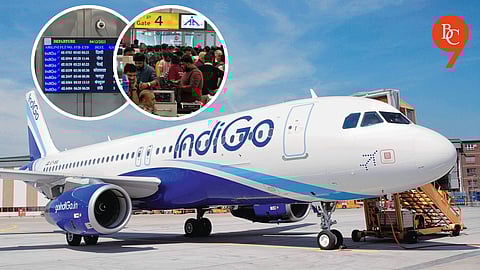


The IndiGo meltdown shows no signs of stopping, as the airline recorded a new high of over 550 flight cancellations nationwide on Thursday, caused by crew shortages, planning gaps, winter congestion, and technical issues.
Join our WhatsApp Channel to Stay Updated!
The airline has informed the DGCA that it expects its operations to be fully restored by 10 February 2026. IndiGo admitted the disruptions were caused by “misjudgement and planning gaps” while implementing stricter pilot duty-time restrictions and is seeking temporary relief from some of the new duty-time norms for its Airbus A320 fleet. Daily flights will also be reduced starting December 8 to gradually stabilise operations.
The Pune disruptions are part of a wider crisis for India’s largest domestic carrier. In just two days, IndiGo reportedly cancelled over 300 flights, marking the fourth consecutive day of widespread operational issues.
Bengaluru, a major IndiGo hub, faced peak-hour congestion, compounded by low visibility, fog, and unplanned aircraft maintenance. Arrivals were delayed, departures postponed, and cancellations piled up, highlighting the cascading effect of a dense flight schedule combined with crew shortages.
Despite restoration plans, air travel in Pune was thrown into disarray on Friday morning as 32 IndiGo flights were cancelled and one diverted between midnight and 8 am on December 5. Hundreds of passengers were stranded at Pune Airport, with many stuck onboard aircraft for hours without timely communication or basic amenities.
According to airport data, 16 arrivals and 16 departures of IndiGo flights were cancelled, while a Nagpur–Pune service was diverted to Hyderabad due to Flight Duty Time Limitations (FDTL). The airline’s grounded planes filled nine of the 10 parking bays, leaving virtually no space for other carriers. As a result, Air India and Akasa Air were forced to cancel flights as well.
The turmoil was caused by a mix of factors, including technical glitches, winter schedule shifts, weather conditions, staffing constraints, and a shortfall of pilots.
The disruptions are closely linked to the new Flight Duty Time Limitations (FDTL) mandated by the government to enhance passenger and crew safety:
Pilots now require 48 hours of weekly rest instead of 36.
Night landings have been reduced from 6 to 2 per pilot.
The night flying window has been adjusted to 12 am–6 am.
With fewer pilots available to operate over 2,200 daily flights, IndiGo faced immediate crew shortages, forcing widespread cancellations. The DGCA has asked the airline for a full explanation and a mitigation plan.
IndiGo’s tight schedule means delays ripple across multiple flights. Crew shortages, weather disruptions, technical checks, and FDTL rules created a nationwide domino effect, with Pune affected locally and Bengaluru hardest hit.
755 flights: Crew & FDTL constraints
258 flights: Airspace restrictions
92 flights: ATC failures
127 flights: Other factors
IndiGo operates the majority of India’s domestic flights, including high-frequency overnight services. Its network relies on maximizing crew hours and minimizing downtime, leaving little room to adjust when duty-time limits tightened.
Other carriers, such as Air India, Vistara, and Akasa, operate smaller networks, making it easier for them to adjust schedules and avoid mass cancellations.
IndiGo has pledged to stabilise operations and ease passenger inconvenience, with a full network restoration targeted for 10 February 2026. The airline is temporarily reducing flights, seeking regulatory relief on pilot duty limits, and implementing mitigation plans to ensure smoother operations going forward.
