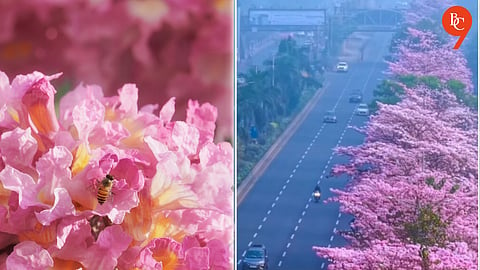


The Eastern Express Highway near Godrej in Vikhroli transforms into a breathtaking corridor of pink each year, a spectacle that has become woven into Mumbai’s seasonal rhythm. Often mistaken for Japanese Sakura, these vibrant blooms actually belong to the Pink Trumpet tree, a tropical species from Central and South America, thriving effortlessly in the city’s humid climate.
Pink trumpet trees, which were introduced by the BMC many years ago for enhancing urban aesthetics, require minimal upkeep and can withstand pollution. They remain bare for much of the year, but burst into vivid 'cotton-candy' colors every February and March. For Mumbaikars tired from travel, this brief display provides a unique cinematic experience amid the city's dull main roads.
To catch Mumbai’s pink bloom at its peak, visit early morning between 6 AM and 8 AM. The three- to four-week bloom offers soft light for photography, minimal crowds, and a “pink carpet” of fallen flowers before traffic disturbs it.
The pedestrian overpasses in Vikhroli offer an excellent aerial view of the pink canopy extending over the highway. Alternatively, walking along the service roads near Kanamnagar provides a safer, more leisurely walk beneath the rosy branches.
The Pink Trumpet trees start flowering in late December, with peak bloom from February to mid-March. Visitors can walk or cycle along service roads to enjoy and photograph the “pink carpet” of petals safely without disrupting traffic.
While Vikhroli holds Mumbai’s iconic pink bloom, other Indian cities showcase their own “cherry blossom” spectacles. Bengaluru, the “Garden City,” bursts into color with Pink Trumpet trees across Cubbon Park, Jayanagar, and Whitefield during the same season. In Goa, these trees have adorned areas near the Basilica of Bom Jesus in Old Goa for over 50 years. Across cities, these hardy tropical trees have become a vibrant alternative to temperate cherry blossoms, transforming everyday streets into seasonal celebrations.
The Vikhroli bloom faces threat from the Ghatkopar-Thane elevated corridor project, which plans to cut nearly half of 700 trees. While MMRDA promises 4,000 new saplings and some tree transplants, survival rates for mature trees are low. The bloom’s future now awaits the NGT hearing on February 27, 2026.
