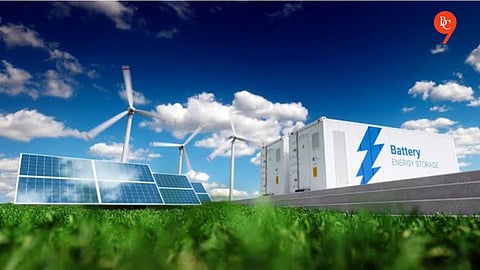


India intends to require battery storage for all new government-backed solar and wind projects starting in July 2027, ensuring that renewable power can be stored and supplied on demand, according to draft regulations.
India plans to mandate two-hour battery storage equivalent to at least 10% of capacity for all new solar and onshore wind projects commissioned after July 1 next year, the draft regulations produced by the Central Electricity Authority showed.
The requirement would become more stringent from July 2029, when the minimum storage duration would increase to four hours, while retaining the 10% capacity requirement.
The proposal emerges as India swiftly increases its renewable energy capacity yet encounters mounting difficulties in handling variability in solar and wind output.
Storage systems can capture excess electricity and discharge it when needed, helping to cut back on the power restrictions that have become widespread.
India, the world's third-biggest solar power generator, curbed nearly 14% of its solar power output between April and June due to surplus clean energy during daytime and limited transmission infrastructure available to carry power.
The draft rules also propose that clean energy projects commissioned after July 2027 include grid-forming inverter capabilities.
Grid-forming technologies can help maintain voltage and frequency stability and are viewed as increasingly important as renewable energy's share in the power mix rises.
