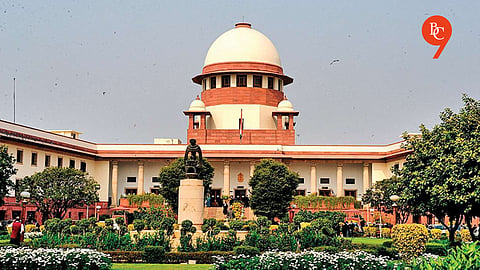


On Friday, the Supreme Court issued an interim order banning the extraction, modification, distribution, reposting, uploading, or monetisation of audio and video recordings of court proceedings on social media and other digital platforms without prior approval from the relevant court.
A Bench consisting of Chief Justice of India Surya Kant, Justice Joymalya Bagchi and Justice V Mohana issued an interim order stating that no audio or video recordings of judicial proceedings may be extracted, altered, shared, posted, reposted, uploaded or monetised on social media or any other digital platform without prior permission from the Registrar General of the respective High Courts or the Secretary General of the Supreme Court.
The Court specified that the temporary order would not interfere with media coverage of court proceedings.
The order was issued during the hearing of a public interest litigation filed by journalist Harshita Grover, who sought guidelines to govern the clipping, editing, distribution, and monetisation of audiovisual recordings of court proceedings on digital platforms.
The petition argues that the selective and out-of-context dissemination of courtroom proceedings is damaging the dignity of the courts and weakening public trust in the justice delivery system.
Senior advocate Vikas Singh, representing the petitioner, drew attention to the improper use of court proceeding videos on social media and other online platforms.
Solicitor General Tushar Mehta concurred with Mr. Singh, stating that some form of regulation is necessary.
Judges also expressed concern over the dangers of AI morphed videos, and digital media.
"Regulating data is one of the biggest challenges in digital space... so we should ensure limited access and therefore restrict livestream itself. Parties must expressly make a prayer that they want to see. It can't be a 24/7 entertainment channel by court," Justice Bagchi observed.
He further observed that online access links provided for virtual hearings are frequently shared without restriction and stated that this type of access also needs to be regulated.
