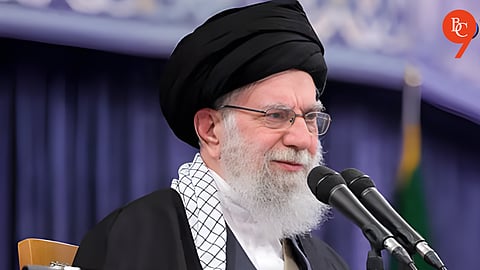


After Supreme Leader Ayatollah Ali Khamenei’s death, Iran is bracing for a historic political transition, triggering intense jockeying for power both within the country and beyond. Khamenei, who led Iran since 1989, was the Middle East’s longest-serving head of state. His passing marks only the second leadership change since the 1979 Islamic Revolution. The state has declared 40 days of mourning and a seven-day public holiday, according to the IRNA news agency.
Following the passing of Supreme Leader Ayatollah Ali Khamenei, a trio will temporarily take on leadership responsibilities, according to Iran's news agency IRNA. The nation's president, the judiciary's head, and a jurist from the Guardian Council will jointly manage the transition phase until a successor is chosen.
US President Donald Trump announced Khamenei’s death on Truth Social, calling him “one of the most evil people in history.” The announcement came after massive US and Israeli strikes on Iran on Saturday. Iranian media, cited by the Associated Press, said one of the first explosions was heard near the Supreme Leader’s office.
“He was unable to avoid our Intelligence and Highly Sophisticated Tracking Systems,” Trump wrote, adding that the US was “working closely with Israel.” He claimed “there was not a thing he, or the other leaders that have been killed along with him, could do,” and described it as “the single greatest chance for the Iranian people to take back their Country.”
A new report from the Council on Foreign Relations, a think tank located in the United States, identified several individuals often cited as potential successors.
Hojjat-ol-Eslam Mohsen Qomi: Mohsen Qomi, a trusted advisor to Khamenei, is regarded as a reliable insider. His supporters think that his closeness to the late leader might aid in preserving continuity and stability amid a challenging transition.
Ayatollah Gholam Hossein Mohseni Ejei: Mohseni Ejei, who is presently leading Iran's judiciary, has occupied significant roles in security and government. His background in administration might be influential during uncertain times.
Ayatollah Mohsen Araki: Araki, a prominent figure in the Assembly of Experts, possesses significant religious qualifications and is often mentioned in conversations about succession.
Ayatollah Hashem Hosseini Bushehri: Bushehri, who serves as the Friday prayer leader in Qom and is a member of the Assembly of Experts, is also seen as a possible candidate.
Ayatollah Alireza Arafi: Arafi, a high-ranking cleric who is part of both the Guardian Council and the Assembly of Experts, also leads Iran's seminary system. The Council on Foreign Relations suggests that his appointment is expected to maintain the current political framework.
