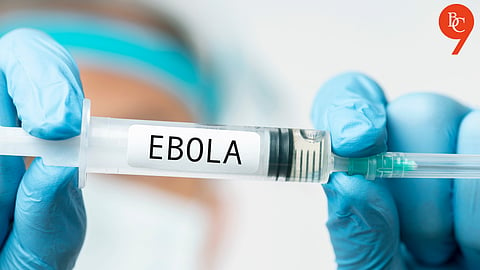


The World Health Organization declared the Ebola outbreak spreading across the Democratic Republic of Congo and Uganda a Public Health Emergency of International Concern (PHEIC) on Sunday, as the death toll climbed to at least 88, with over 300 suspected cases reported in a matter of days.
"WHO...is hereby determining that the Ebola disease caused by Bundibugyo virus in the Democratic Republic of the Congo and Uganda constitutes a public health emergency of international concern (PHEIC), but does not meet the criteria of pandemic emergency," the Geneva-based body said on Sunday.
The declaration was made by WHO Director-General Tedros Adhanom Ghebreyesus. Authorities initially reported the outbreak on Friday, citing 65 deaths and 246 suspected cases. By Saturday, the number of suspected infections had risen to 336, with 13 cases confirmed. Four of those confirmed patients have died.
The outbreak is being driven by the rare Bundibugyo strain of Ebola, for which no approved vaccines or treatments currently exist. This is only the third recorded occurrence of the strain, making it harder for health systems to respond effectively.
The first case was a 59-year-old man in Congo’s Ituri province on April 24, who died days later. Authorities were alerted only on May 5, by which time 50 deaths had already been reported, raising concerns over delayed detection and weak surveillance.
By Saturday, there were 336 suspected cases and 87 deaths, mostly in Ituri, with healthcare workers among the victims. The virus has also spread to Uganda, with confirmed cases in Kampala linked to recent travel from Congo, and another case reported in Goma.
World Health Organization has warned the outbreak could be larger than reported and urged stronger surveillance, cross-border screening, and emergency preparedness, while advising against international border closures.
