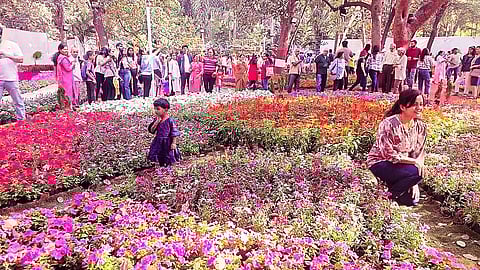


Pune, March 27: The Agri-Horticultural Society of Western India has opposed the state government’s decision to transfer around one acre of land from Empress Botanical Garden for the construction of a court building. The organisation has appealed to social groups and environmentalists to come together and launch a public movement to protect this green heritage.
Speaking at a press conference on Friday (March 27), the organisation’s president Pratap Pawar and honorary secretary Suresh Pingale shared details. They said that rapid urban cementing and construction in the city is already on the rise, and the loss of such a green zone would have long-term environmental consequences.
They further pointed out that several government-owned lands in the city are encroached upon, and suggested that the government should rehabilitate residents from those areas and use alternative land for construction. “Instead of appreciating institutions that preserve green spaces and protect the environment, they are being put under pressure,” they added.
The society has been maintaining the garden since 1892—over 130 years. The garden’s development was supported by industrialist Shantanurao Kirloskar and senior leader Sharad Pawar. Around ₹35–40 crore has been spent through public participation and contributions from industry to preserve this green space.
The garden is home to hundreds of rare trees and vines brought during the British era from Central America and Africa. Large-scale plantation has also been carried out with the aim of developing a future biodiversity park. The organisation warned that allocating this land for construction could damage the natural ecosystem.
Despite repeated protests and representations since the land transfer process began, the organisation claims the government has not responded.
The Revenue and Forest Department had leased around 37 acres of government land for Empress Garden, with a fresh agreement signed about a year ago. However, the state government has recently decided to allocate around 4,000 square metres (approximately one acre) of this land for a military court building.
