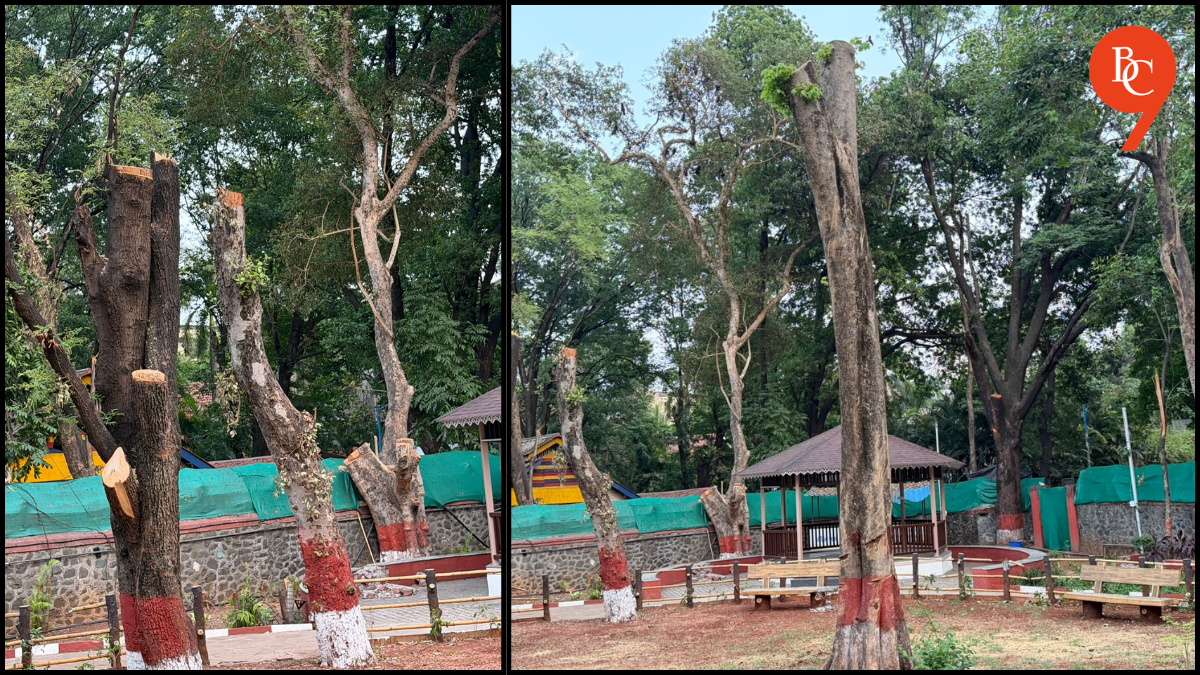


Pune, 29 April 2026: The Pune Municipal Corporation (PMC) has cut or heavily pruned nearly 20 trees within the mayor’s bungalow premises, drawing attention over the sudden action and lack of clear justification.
The bungalow, which earlier had dense greenery, now appears largely stripped of vegetation after the operation.
Trees located in both the front and rear sections of the premises were either fully cut or trimmed significantly, leaving behind trunks up to 20 feet high. The affected trees include mango, tamarind, neem, and other species.
The work was carried out by the Shivajinagar–Ghole Road ward office.
Garden Superintendent Ashok Ghorpade said that permissions for such actions are usually granted by the assistant commissioner’s office but stated he did not have details about this case.
Assistant Commissioner Balasaheb Dhawale Patil also said that complete information regarding the tree cutting was not immediately available and would be shared later.
Mayor Manjusha Nagpure said the tree cutting began when she was not present at the bungalow. After learning about it, she stopped the work and asked officials about the permission.
She said the required approval was shown to her, and after a couple of days, pruning resumed. According to her, the branches were cut as part of treatment for pest infestation affecting the trees.
Records show that a proposal to prune 19 trees was submitted on March 12 and approved the very next day, raising concerns about the speed of clearance.
It has also been alleged that mandatory procedures were not followed. The approval was reportedly granted without involving the Tree Authority Committee, and the usual process of issuing a 15-day public notice, inviting objections, and conducting hearings was skipped.
The incident has raised broader questions about how tree-related decisions are taken and whether established rules are being followed.
While the PMC regularly promotes tree plantation and conservation efforts, such actions have led to concerns over consistency and accountability in implementation.
