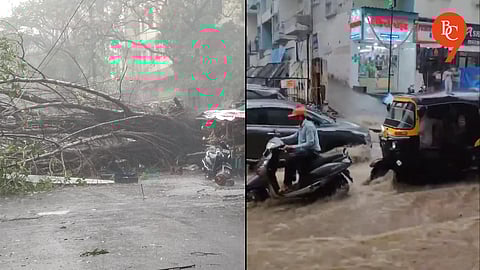


Pune, 4th April 2026: City witnessed an unusually intense spell of rain on April 2nd, leaving both residents and authorities unprepared. According to IMD, Shivajinagar area recorded 65 mm rainfall in just two hours, breaking a 130-year-old April record.
The sudden downpour led to severe waterlogging in several parts of the city, disrupting daily life and raising concerns over preparedness for such extreme weather events.
Pre-monsoon rainfall in April and May is not unusual for Pune. Such showers are typically caused by atmospheric instability, where intense heat interacts with moisture from the Arabian Sea. Western disturbances and convective activity can also trigger thunderstorms, strong winds, and occasional hail.
However, what has changed is the intensity. A warmer atmosphere can hold more moisture, leading to heavier and more concentrated rainfall within short periods. This means that while the occurrence of rain is natural, the scale and intensity are increasingly influenced by climate change.
The flooding seen across city was not just due to heavy rain but also due to structural issues within the city. Rapid and unplanned urbanization has reduced the natural drainage capacity. Cement roads, ongoing construction, and metro work have disrupted traditional water flow channels.
Blocked drains due to plastic waste, construction debris, and garbage dumping have further worsened the situation. Encroachments on natural water channels and incomplete drainage projects have made it difficult for rainwater to flow out efficiently, resulting in widespread water accumulation.
The incident highlights gaps in civic preparedness. Despite pre-monsoon showers being a known phenomenon, the intensity of this event caught the administration off guard, exposing weaknesses in drainage maintenance and disaster response systems.
While weather patterns cannot be controlled, better preparedness can reduce damage. Authorities need to prioritize cleaning and maintaining both natural and man-made drainage systems. Proper disposal of construction waste and stricter monitoring of urban development are essential.
At the same time, citizens also play a role. Reducing plastic waste and avoiding dumping garbage into drains can significantly help in preventing blockages.
Pune’s April rain serves as a reminder that while such weather events may be natural, their impact is shaped by how well a city plans and prepares for them.
