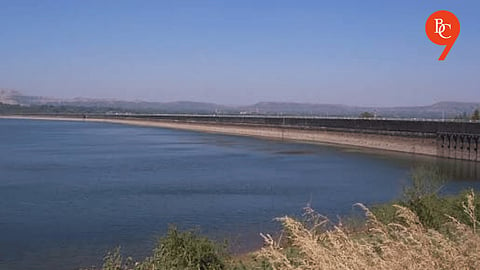


Pune, 26th June 2026: With just five days remaining in June, the southwest monsoon is yet to make a significant impact in Pune district, raising concerns over rapidly declining water levels in reservoirs.
Most dams supplying water to Pune city and surrounding areas are now at critically low storage levels, while four reservoirs have completely exhausted their live water storage.
Except for the Mulshi dam catchment, no reservoir catchment area in the district has recorded more than 100 mm of rainfall so far this season. Although the India Meteorological Department (IMD) officially declared the arrival of the monsoon in Pune on Tuesday, rainfall has remained scattered and insufficient to improve reservoir levels.
According to the Water Resources Department's data released on Thursday, only eight of the district's 26 dams currently have more than 1 TMC of usable water. These include Mulshi, Veer, Pavana, Nira Deoghar, Bhatghar, Varasgaon, Panshet and Bhama Askhed. Among them, Panshet holds the highest live storage at 1.89 TMC, followed by Bhatghar (1.83 TMC), Veer (1.66 TMC) and Pavana (1.53 TMC).
The situation is particularly worrying in the Khadakwasla reservoir system, which supplies drinking water to Pune. Last year, good rainfall by the end of June had increased storage in the four-dam network to 12.19 TMC.
This year, however, the system holds only 3.79 TMC—around 8.40 TMC less than the same period in 2025. The shortage has already forced the Pune Municipal Corporation to implement alternate-day water supply across the city.
Superintending Engineer Pravin Kolhe of the Pune Irrigation Circle said, "the department's priority is to ensure uninterrupted drinking water for Pune city and the rural areas dependent on the reservoir system until August 31."
He added that, "officials are closely monitoring weather forecasts and, although rainfall has begun over the past two days, it has not yet resulted in any significant inflow into the dams."
