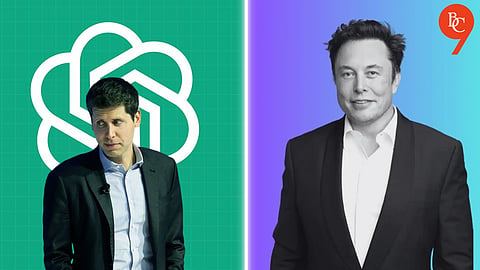


OpenAI Trial: Sam Altman’s testimony, widely anticipated in the OpenAI trial, has added a new twist to the case, with the CEO claiming that Elon Musk once sought centralised control over the company and even discussed passing ownership to his children. Altman used the claim to counter Musk’s criticism that OpenAI has drifted from its original non-profit mission. He said Musk had previously pushed for a controlling stake in the organisation during its early years.
Altman’s testimony was one of the most eagerly awaited moments of the three-week trial. Its importance stems from Musk’s lawsuit, which claims that OpenAI has become overly focused on commercial interests and too closely tied to Microsoft. Altman’s remarks, however, aim to demonstrate that Musk himself had previously sought major personal control over the organization before his departure in 2018.
Under direct examination by OpenAI’s lead defence counsel William Savitt, Sam Altman said he discussed Elon Musk potentially holding a stake in a for-profit OpenAI affiliate.
Altman said the idea of giving Musk long-term controlling power made him “extremely uncomfortable,” and that his cofounders shared similar concerns.
He also testified that when asked what would happen to his control after his death, Musk suggested it could be passed on to his children. Altman further said Musk’s exit from OpenAI was seen by some researchers as a “morale boost,” as they felt demotivated by his management style.
Sam Altman testified that Elon Musk once directed OpenAI cofounders to rank and fire researchers, a move he said harmed the organisation. He also said Musk had floated the idea of merging OpenAI with Tesla, raising concerns about the company’s independence.
Altman added that “Tesla is a car company, and it does not have the mission of OpenAI,” arguing that such a merger could have undermined or even ended OpenAI’s nonprofit goals.
The OpenAI vs Elon Musk trial is a legal dispute over OpenAI’s shift from a nonprofit organisation to a for-profit company. Elon Musk alleges that OpenAI moved away from its original mission and violated its founding agreement. He is seeking to reverse the restructuring, change the company’s leadership, and restore value to the nonprofit arm, claiming he was misled into donating funds to an organisation that later partnered with Microsoft.
OpenAI’s leadership, including Altman, strongly disputes those claims. They argue that the move toward a for-profit structure was necessary to secure the enormous funding required to develop advanced AI systems. In their view, the transition was driven by the need to scale OpenAI’s mission and remain competitive, rather than by personal financial gain.
