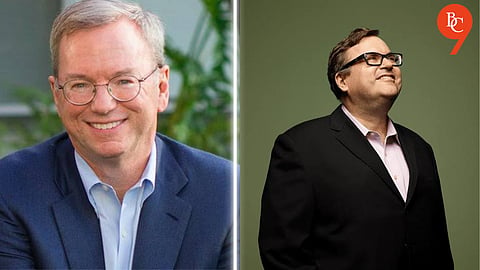


Former Google CEO Eric Schmidt and LinkedIn co-founder Reid Hoffman are among more than 200 economists, executives and researchers, including over a dozen Nobel Prize winners, who have signed an open letter warning that artificial intelligence could trigger large-scale job displacement unless policymakers act swiftly to build safeguards around the technology.
What the letter says
Titled "We Must Act Now: A Statement on AI's Transformation of the Economy," the brief 88-word statement argues that AI could grow "radically more powerful" over the next decade, potentially driving an economic transformation larger than the Industrial Revolution but compressed into a far shorter timeframe. It cautions this shift carries both risks, including widespread job losses, and opportunities, such as major gains in living standards, and calls on economists, policymakers and technology leaders to urgently understand the economics of transformative AI and build the incentives, guardrails and institutions needed to ensure the technology complements humans rather than simply replacing them.
Who signed it
The statement was organised by Stanford economist Erik Brynjolfsson, along with economists Ajay Agrawal, Tom Cunningham and Anton Korinek. Signatories include former Google CEO Eric Schmidt, LinkedIn co-founder Reid Hoffman, venture capitalist Vinod Khosla, Anthropic co-founder Jack Clark, Google AI lead Jeff Dean, and Nobel laureates Joseph Stiglitz, Daron Acemoglu and Simon Johnson. Notably, the chief economists of both OpenAI and Anthropic also added their names, alongside AI safety researcher Yoshua Bengio.
The letter marks a notable turn for some signatories who have historically pushed back against AI doom narratives. Brynjolfsson said AI capabilities are advancing far faster than the collective understanding of their economic consequences, and that guiding the technology to complement human work rather than imitate it was essential to spreading its benefits broadly rather than concentrating them narrowly.
Views on AI's potential impact on employment remain mixed. Research by the International Monetary Fund (IMF) suggests AI adoption is still concentrated among a relatively small share of workers, indicating that its economy-wide effects on employment remain limited. Studies by Harvard Business School, INSEAD and the University of Toronto have found that AI is already influencing hiring patterns, even as broader labour-market impacts continue to be assessed.
Some industry leaders have projected more significant disruption. Anthropic CEO Dario Amodei has said AI could eliminate up to half of entry-level white-collar jobs within five years, while other researchers and executives argue the technology is more likely to transform existing roles than replace them outright.
The statement comes amid broader debate over AI's impact on employment and economic growth, with policymakers and industry leaders considering measures to manage the technology's risks and opportunities.
