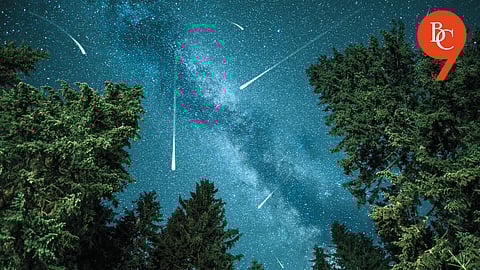


As the nights lengthen in the Northern Hemisphere, the Geminids meteor shower 2025 returns to captivate skywatchers with its spectacular displays of "shooting stars." Peaking on the weekend of December 13-14, it promises one of the year’s most stunning meteor shows, with meteors streaking across the sky in brilliant bursts.
With perfect viewing conditions, up to 120–150 meteors per hour could light up the sky, making the Geminids a must-see for both amateur stargazers and seasoned astronomers. Whether you’re venturing into the cold or enjoying the show from the comfort of your home, here’s how to fully experience this celestial spectacle.
The Geminids meteor shower originates from the debris of an asteroid named 3200 Phaethon. Until recently, scientists believed the shower was caused by dust particles from the asteroid. However, two years ago, they discovered that Phaethon's tail is actually made of glowing sodium gas, not dust.
The Geminids peak on the night of December 13–14, with maximum activity from 2 AM to 4 AM IST on December 14. While meteors can be seen from late evening, the best viewing window is after midnight when Earth aligns with the debris stream.
For those in light-polluted areas or preferring indoor viewing, the Virtual Telescope Project offers a live stream from Italy, capturing the Geminids in high definition. Additional streams from NASA and the International Meteor Organization may also be available on YouTube under "Geminids 2025 live.
For the best online experience, dim the lights, sip a warm drink, and use a star chart app to locate the radiant in Gemini. While nothing compares to seeing the meteor shower with the naked eye, these streams bring the magic of the Geminids to everyone this weekend. Enjoy the show!
The Geminids meteor shower is one of the most reliable and intense, rivaling only the Perseids in summer. What makes it unique is that, unlike most meteor showers driven by comet dust, the Geminids come from asteroid 3200 Phaethon, which sheds debris as it passes close to the Sun. This creates a dense stream of particles that Earth passes through at 35 km/s.
In 2025, the event is especially significant, as minimal moonlight, only a 25% waning crescent, will rise late in the night, ensuring dark skies perfect for spotting even the faintest meteors. With a peak rate of up to 150 meteors per hour under ideal conditions, this year's Geminids are set to be a must-see, offering a breathtaking glimpse of Earth's path through the solar system.
