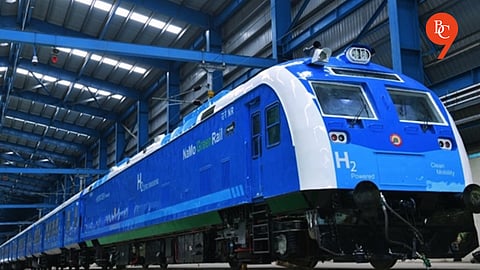


Marking a significant milestone in Indian engineering, Indian Railways is preparing to launch the country’s first hydrogen-powered fuel cell trainset, a train that produces its own electricity onboard using hydrogen, the cleanest known fuel.
Designed, built, and assembled in India, the train has been created using homegrown technology, showcasing the nation’s expanding expertise in advanced railway engineering.
In contrast to traditional electric trains that receive power from overhead cables, the Hydrogen Fuel Cell Trainset produces its own electricity onboard via a chemical reaction between hydrogen and oxygen, emitting only water vapour as a by-product.
By producing electricity onboard using clean hydrogen technology, the train stands as the most environmentally friendly form of rail propulsion, driving the future of sustainable mobility.
The train is designed to operate at 110 kilometers per hour, but along this section of track its maximum speed will be restricted to 75 kilometers per hour.
The train consists of 10 coaches, placing it among the longest hydrogen-powered passenger trains built to date.
It is driven by a 3,200-horsepower propulsion system, ranking among the most powerful hydrogen-powered trainsets currently in service.
The process generates solely water vapor as a by-product, leading to no carbon emissions during its operation.
Using green hydrogen also reduces dependency on electricity produced by fossil fuel-based thermal power plants, thereby aiding India’s shift toward sustainable transportation.
The train is equipped with multi-layer safety systems capable of detecting hydrogen leaks, heat, flames and smoke.
With the introduction of this train, India joins the select group of countries that have operational hydrogen-powered trains. These include Germany, Japan, China and the United States.
Prime Minister Narendra Modi will flag off India’s first hydrogen train between Jind and Sonipat at Jind railway station tomorrow during his visit to Haryana.
