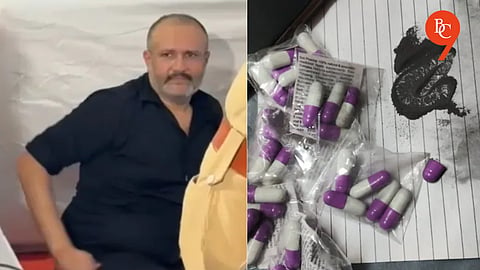

Mumbai, 29th June 2026: A 39-year-old man from Pune has been arrested for allegedly attempting a mass poisoning by distributing poisonous capsules disguised as painkillers during a Muharram procession in Mumbai's Byculla. Police said the accused, identified as Fayyaz Premji, had carefully planned the attack and intended to cause large-scale casualties.
According to investigators, Premji distributed capsules containing zinc phosphide, a highly toxic chemical commonly used in rat poison. His actions raised suspicion among women volunteers at the procession, leading to his detention. However, some people had already consumed the capsules and later complained of illness.
During interrogation, Premji allegedly confessed that he wanted to 'take revenge on the world' after his wife separated from him two years ago. Police said he believed society had wronged him following the breakdown of his marriage and decided to target innocent people during the religious gathering.
Investigators revealed that Premji had extensively researched the effects of zinc phosphide on the human body using Google and artificial intelligence tools. Police believe he got the idea after noticing a severe rat infestation near his residence in Pune, where zinc phosphide-based pellets were commonly used as rodent poison.
Police said the accused had ordered nearly 30,000 empty capsules and around 50 kilograms of zinc phosphide. At the time of his arrest, he was carrying nearly 15,000 capsules allegedly filled with the poison.
He also reportedly convinced several people to help distribute the capsules by falsely claiming they were painkillers being handed out as a charitable service.
Premji is a resident of Konark Nagar in Pune's Viman Nagar area and previously worked at his father's paint factory. He holds a Bachelor of Business Administration (BBA) degree.
Police are also examining his international travel history after discovering that he visited Iran and Iraq several times between 2019 and 2025. His mother and sister currently live in Iran, and investigators found that he made 19 foreign trips during the period, including three visits to Iran within just 19 days.
Officials are now scrutinising his travel records, financial transactions and other communications to determine whether the case has any international links. However, police clarified that no evidence of a foreign conspiracy has been established so far.
The investigation is continuing to determine the full extent of the alleged plot and whether anyone else was knowingly involved in the planned attack.

