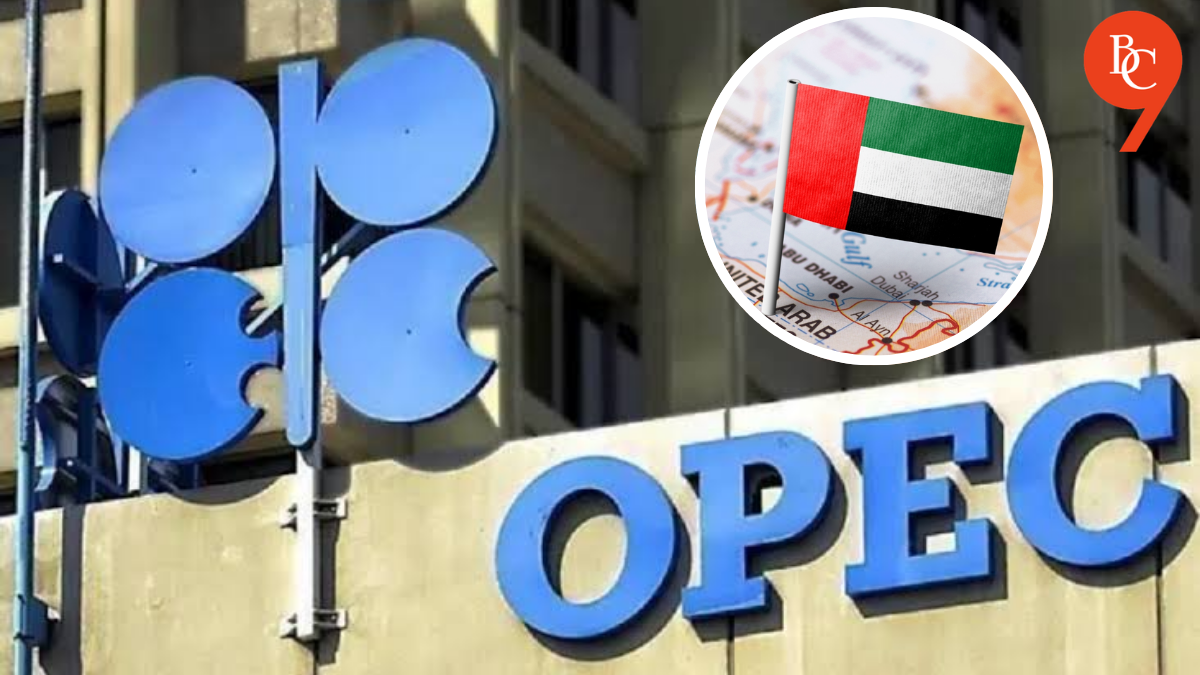

The United Arab Emirates has announced its decision to exit OPEC (Organization of the Petroleum Exporting Countries) and OPEC+, a move that marks a significant shift in global oil politics, according to inputs from Reuters. The development comes at a time of heightened geopolitical tensions and disruptions in global energy markets linked to the ongoing Iran conflict.
UAE Energy Minister Suhail Mohamed al-Mazrouei said the decision was made after a detailed review of the country’s long-term energy strategy. He clarified that the move was a sovereign policy decision and was not discussed with other member countries, including Saudi Arabia.
The exit is being viewed as a setback for OPEC, an organisation that has long struggled to maintain unity among its members despite disagreements over production levels and geopolitical issues. The UAE has been a key member of the group for decades, and its departure could reshape internal dynamics within the oil alliance.
However, UAE officials indicated that the immediate impact on global oil markets may be limited, citing ongoing disruptions in oil shipments through strategic routes such as the Strait of Hormuz, where tensions have already affected supply chains.
The decision also comes amid broader regional tensions, with UAE officials previously voicing concerns over security challenges during the Iran conflict and the response of regional allies.
OPEC (Organization of the Petroleum Exporting Countries) is a permanent intergovernmental body established in 1960 to harmonize petroleum policies, promote stability in the oil market, and guarantee equitable revenues for oil-producing states. It influences the global oil supply by determining production quotas and oversees about 80% of the world’s proven oil reserves and approximately 40% of total oil output.
OPEC+ is an alliance of roughly 23 countries, created in 2016, that brings together the 12–13 member states of OPEC and 10 major oil-exporting nations that are not part of OPEC - notably Russia, Mexico, and Kazakhstan. It was created to manage global oil supply, stabilize prices, and prevent market volatility. Together, they produce about 40–59% of the world's crude oil.
(Inputs from Reuters.)

