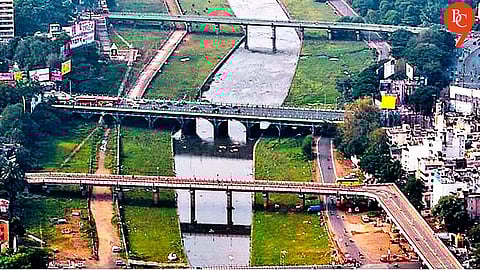


Pune’s ambitious riverfront development project, estimated at ₹4,727 crore, was envisioned as a transformative effort to “rejuvenate” the Mula-Mutha river. Marketed as a major urban makeover, the project promises public amenities, improved river access, and recreational spaces. However, recent incidents and mounting environmental concerns have sparked debate over whether the project justifies its cost, both financially and ecologically.
Just days ago, Akanksha Developers was caught illegally dumping construction debris into the riverbed near Tilak Bridge. The Pune Municipal Corporation (PMC) responded by imposing a ₹10 lakh fine and sealing the project site. While swift action was taken, environmentalists argue that the damage to the river ecosystem had already occurred.
In Hinjewadi, untreated sewage continues to flow into a drain connected to the Mula River. Residents have also reported illegal garbage dumping and burning near residential areas, further worsening water pollution and raising concerns about drinking water safety.
Meanwhile, in Lohgaon, 13 college students recently fell ill due to suspected food poisoning, with contaminated water believed to be a possible cause. Though investigations are ongoing, the incident has intensified public anxiety about water quality in the city.
The Pune Riverfront Project proposes development across 23 hectares, including 18 temples and 18 crematoriums. Plans also include 249 staircases, 19 ramps, and 74 refurbished ghats to improve river access, along with parks and gardens spanning 50 hectares.
However, environmental experts argue that the project prioritises beautification over ecological restoration. Instead of focusing on cleaning polluted waters and restoring natural habitats, critics say the plan involves large-scale concretisation of riverbanks, potentially disrupting the river’s natural flow and biodiversity.
The project’s much-anticipated inauguration, originally scheduled for February 15, was postponed following the demise of NCP leader Ajit Pawar. Meanwhile, opposition to the riverfront development has been gaining momentum.
On Valentine’s Day, citizens and environmental activists organised a “My River, My Valentine” cleanup drive to protest against the project and highlight concerns about pollution and ecological damage.
In 2025 alone, 1,302 trees were felled along a nine-kilometre stretch of the Mula-Mutha, with another 1,843 trees marked for transplantation. Environmental groups question whether such measures align with the stated goal of rejuvenation.
The design of Pune’s riverfront draws inspiration from Ahmedabad’s Sabarmati riverfront. However, the Sabarmati project faced challenges during last year’s monsoon when parts of it were submerged. Reports by The Energy and Resources Institute (TERI) have also cautioned that increasing instances of intense rainfall could pose significant risks to urban riverfront developments in the coming years.
Critics argue that such warnings must be carefully considered in Pune’s planning process, particularly given the city’s history of flooding and heavy rainfall.
As the debate intensifies, residents and experts alike are asking questions: Can a river truly be rejuvenated through large-scale construction if its waters remain polluted? Is the focus on public promenades overshadowing urgent environmental restoration needs?
While authorities maintain that the riverfront project will enhance urban infrastructure and public spaces, many citizens believe that cleaning the river and strengthening ecological safeguards should take precedence. The future of Pune’s riverfront may ultimately depend not only on infrastructure, but on whether development and environmental sustainability can find common ground.
