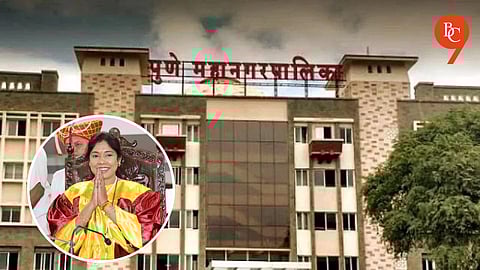

Pune, 10 February 2026: After 1,427 days, the long phase of 'administrator rule' in the Pune Municipal Corporation came to an end on Monday with the election of Mayor Manjusha Nagpure and the Deputy Mayor. This marks the return of the city’s civic administration to elected representatives after nearly three years and eleven months.
The previous elected body, chosen in 2017, completed its term on March 14, 2022. However, municipal elections were delayed due to the unresolved OBC reservation issue.
As a result, from March 15, 2022, the state government appointed the then Municipal Commissioner Vikram Kumar as administrator, transferring all powers of the General Body, Standing Committee, and subject committees to the administration.
During this period, former corporators were reduced to the role of “ex-corporators,” with little influence in resolving citizens’ day-to-day issues. Complaints related to clogged drainage lines, garbage collection, and water supply often went unanswered.
The situation worsened at ward offices, where lack of accountability led to confusion and inefficiency, forcing many citizens to directly approach the Commissioner’s office.
Over these years, Pune witnessed three administrators, Vikram Kumar, Dr. Rajendra Bhosale, and Naval Kishore Ram. Several Additional Municipal Commissioners were also transferred. The current additional commissioners, Pavneet Kaur, Prithviraj B.P., and Omprakash Divte, will now, for the first time, work directly with elected representatives and face the municipal council.
The administrator phase was not without positives. Around 880 municipal employees were recruited through a transparent process, income limits under the Urban Poor Scheme were increased, and an online work management system was introduced to reduce errors in tenders. Efforts were also made to ease traffic congestion through focused land acquisition and to prepare water supply plans for newly merged villages.
However, major issues remained unresolved. There was no clear decision on property tax rebates or taxation in merged villages. Coordination at ward offices deteriorated, citizen grievances piled up, and agents were often given priority over ordinary residents. Poor road conditions, broken footpaths, faulty streetlights, and inadequate water supply became common complaints.
With the end of administrator rule, the civic administration has now formally returned to elected representatives. Citizens hope this shift will restore accountability and improve basic services that suffered during nearly four years of bureaucratic control.

