

Last week’s unexpected rainfall in Pune once again sparked conversations around climate change and global warming. While such unseasonal events may feel new, the bigger question remains: has Pune’s summer actually changed over the past 50 years?
The answer is yes, but not in the way most people assume.
Data shows that Pune’s annual mean temperature has increased by about 1.3°C since the early 1970s, rising from roughly 23°C to 24.3°C today. Similarly, the average summer temperature has gone up by around 1.1°C.
However, the increase in peak summer heat is surprisingly small. In April, the average maximum temperature was about 38°C in 1970, and by 2025 it has risen only marginally, by around 0.5°C.
At first glance, this suggests that summers shouldn’t feel dramatically worse. But residents across the city would strongly disagree.
The real shift lies in the baseline temperature. Earlier, Pune’s daily summer range typically moved between 20°C and 35°C. Today, that range has shifted upward to around 24°C to 36°C. Even if peak temperatures are similar, the entire day, and night, remains warmer.
Warmer nights are a major factor. The human body relies on cooler nights to recover from daytime heat. With minimum temperatures rising by about 0.8°C, this natural cooling process is disrupted, leaving people feeling constantly fatigued and overheated.
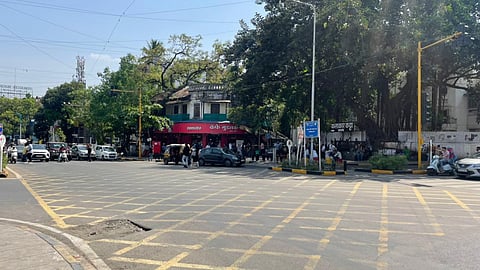
Rapid urbanization has intensified what scientists call the urban heat island effect. Concrete roads, glass buildings, and shrinking green cover absorb heat during the day and release it slowly at night, keeping temperatures elevated.
Areas like Hinjewadi and Kharadi often feel significantly hotter because of dense construction and IT infrastructure. Studies suggest that such zones can be 4–6°C warmer than greener or less developed areas.
Pune has also lost nearly 40% of its tree cover since 1970—about 50–70 square km. Trees play a crucial role in cooling through shade and evapotranspiration, while open soil cools faster than concrete. Their loss has directly contributed to rising heat levels.
Traditionally known for its dry heat, Pune is now witnessing increased humidity during summer due to pre-monsoon showers, unseasonal rains, and even hailstorms. This added moisture makes temperatures feel higher than they actually are.
This is why your phone might show 35°C, but the 'feels like' temperature reads 37°C or more. This value accounts for humidity and how the human body perceives heat, not just what a thermometer records.
Another major change is the duration of heat. Earlier, peak heat conditions would last for two to three hours a day. Now, intense heat can persist for six to seven hours, increasing overall exposure.
On top of this, human-generated heat, from traffic, air conditioner exhausts, and industrial activity, further raises local temperatures, especially in densely populated and high-traffic areas.
The human body’s comfort range lies between 22°C and 26°C. Even a 1°C rise beyond this range can increase sweating, elevate heart rate, and cause noticeable discomfort.
This explains why even a seemingly small rise in average temperature is having a disproportionately large impact on how people experience summer.
While global warming is a large-scale issue, local action can still make a difference. Reducing carbon footprints, preserving green cover, and planning urban development carefully are key steps.
Recent moves of Pune Municipal Corporation (PMC) to use asphalt instead of cement concrete for certain roads are seen as positive, as asphalt retains less heat. However, long-term solutions will depend on balancing development with environmental sustainability.
The data makes one thing clear: Pune’s summers are not dramatically hotter in terms of peak temperature, but they are undeniably harsher. With warmer nights, longer heat exposure, reduced greenery, and increasing urbanization, the city today feels far hotter than it did decades ago.
And unless corrective steps are taken, this trend is only likely to intensify.
