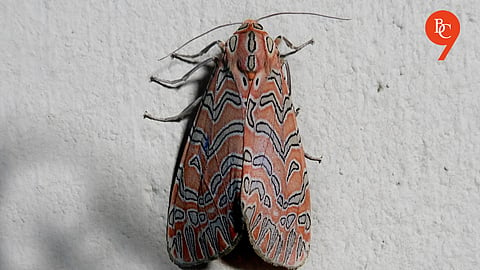

A new genus and species of tiger moth has been discovered in the biodiversity-rich Western Ghats, marking a significant achievement for scientists from the Zoological Survey of India (ZSI), Pune. The discovery was made by an international research team in Kerala’s Idukki district, and the newly identified species has been named Antaram idukki.
The research was led by Dr. Aparna Kalawate of ZSI’s Western Regional Centre in Pune, along with former Natural History Museum London curator Dr. Alberto Zilli, ZSI Kozhikode scientist M.D. Jaffer Palot, and independent moth researcher Balakrishnan Valappil from Kerala.
Their findings have recently been published in the international journal Journal of the Lepidopterists’ Society.
According to the researchers, Antaram idukki has so far been recorded only from Idukki district. Despite extensive surveys across different parts of the Western Ghats, the species has not been found elsewhere, indicating that it may be extremely rare. Scientists are yet to determine details about its life cycle and host plants.
“This discovery sheds light on a previously unknown evolutionary lineage and reveals how much of the Western Ghats’ insect diversity remains undocumented,” said Dr. Aparna Kalawate.
“Idukki, a UNESCO World Heritage region known for its rich biodiversity, is facing growing threats from unregulated tourism, habitat degradation, climate change and increasing landslides. Documenting and conserving such rare species before they disappear is therefore becoming increasingly important,” she said.
Researchers also highlighted that conservation efforts often focus on large and charismatic animals such as tigers and elephants, while insects and other invertebrates that form the foundation of ecosystems receive far less attention. “Thousands of species in the Western Ghats may still await discovery,” the researchers said.
Tiger moths play a crucial ecological role as pollinators, particularly for plants that bloom at night. They also serve as an important food source for birds, bats and other wildlife, while acting as biological indicators of environmental change.
The discovery of Antaram idukki underlines the vast scope for further research into India’s insect diversity and the importance of protecting fragile ecosystems such as the Western Ghats.

