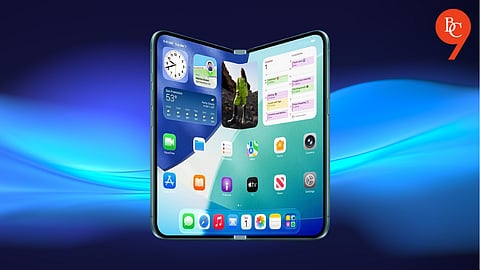

Apple has yet to enter the foldable phone market, despite competitors like Samsung with its Galaxy Z Fold and Flip, Motorola’s Razr, and Google’s Pixel Fold Pro series. While many have wondered why Apple hasn't released a foldable iPhone, rumors suggest that the company may finally unveil the iPhone Fold by late 2026. Apple has reportedly been testing foldable prototypes internally for years, waiting to resolve the issues that have plagued other foldable devices.
Certainly, foldable phones remain costly and specialized, and Apple's introduction probably won't alter this, maintaining the average cost of foldables at a high level. Nonetheless, competition is beneficial, and the release of the iPhone Fold might disrupt the market. The question is: would you purchase an iPhone Fold for more than $2,000, or would you prefer to wait for a more affordable Android foldable?
Apple’s first foldable iPhone is expected to follow the design of Samsung’s Galaxy Z Fold 7, featuring a dual-screen setup with a 5.5-inch outer display and a 7.8-inch inner screen that opens like a book. The device is predicted to be 9–9.5 mm thick when folded and 4.5–4.8 mm thick when open. While Apple may stick with the traditional foldable design, it could innovate with a crease-free display, working with Corning to develop a bendable version of its Ceramic Shield glass for better durability.
Durability will be a key focus, especially since foldables are known for being less durable than traditional smartphones. Google’s Pixel 10 Pro Fold has set the bar for foldable durability with its IP68 rating, and Apple is likely to improve on this.
Apple’s foldable iPhone will likely feature a powerful A-series chip for smooth performance across multiple displays, while battery life will be optimized despite the slim design. The device may also ditch Face ID in favor of Touch ID, integrated into a side button.
In terms of camera performance, Apple is expected to equip the iPhone Fold with a flagship-grade camera system, potentially surpassing the camera capabilities of current foldables like the Galaxy Z Fold 7 and Pixel 10 Pro Fold. This move could push other manufacturers to improve their foldable cameras as well.
Apple’s foldable iPhone could redefine the foldable phone market by addressing key areas like design, durability, camera quality, and performance.

