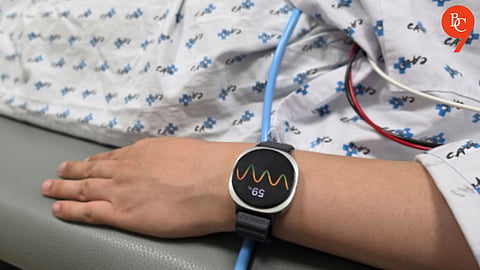

On May 7, Samsung unveiled its Galaxy Watch6, claiming a breakthrough in the early prediction of fainting. In a clinical study conducted with Chung-Ang University Gwangmyeong Hospital, the smartwatch demonstrated strong accuracy in detecting signs of vasovagal syncope (VVS), a common condition that causes sudden loss of consciousness, raising the possibility of real-time alerts before a person collapses.
The joint research team, led by Cho, evaluated 132 patients with suspected vasovagal syncope (VVS) during controlled, medically induced fainting tests. Using the Galaxy Watch6’s photoplethysmography (PPG) sensor, they recorded heart rate variability (HRV) data and processed it through an artificial intelligence algorithm. The results showed that the system could detect signs of an impending fainting episode up to five minutes before it occurred, with an accuracy of 84.6%.
The study results were published in Volume 7, Issue 4 of the leading medical journal “European Heart Journal – Digital Health,” and constitute the world’s first research to successfully show that a commercial smartwatch can be used to predict syncope at an early stage.
Vasovagal syncope happens when a person’s heart rate and blood pressure suddenly decline, often in response to triggers such as intense stress, resulting in a brief loss of consciousness. Although the fainting episode itself is usually not life-threatening, the abrupt collapse can lead to serious secondary injuries, including fractures or concussions, underscoring the importance of early prediction for effective prevention.
Professor Junhwan Cho of Chung-Ang University Gwangmyeong Hospital noted that up to 40% of people may experience vasovagal syncope at some point in their lives, with many facing repeat episodes. He added that early warnings could allow patients to get into a safe position or seek help in time, potentially reducing injury from sudden falls.
Jongmin Choi, head of Health R&D at Samsung’s Mobile eXperience division, said the study highlights the potential of wearables in shifting healthcare toward preventive monitoring. Samsung plans to expand health tracking features across its devices and strengthen collaborations with medical institutions to develop more personalised preventive care solutions. The findings were published in European Heart Journal – Digital Health (Volume 7, Issue 4), and Samsung noted this as the first study showing a commercial smartwatch can help predict syncope in advance.

