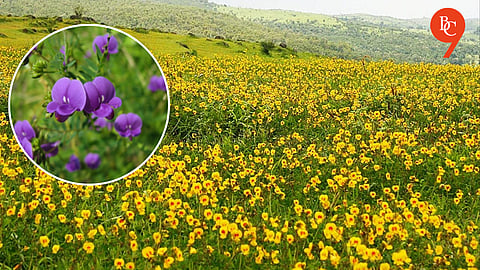

Pune, 3rd August 2026: With monsoon rains covering the Sahyadri ranges in lush greenery, colourful wildflowers have started blooming across the hilltops, plateaus and slopes of the Western Ghats.
Species such as yellow Sonki, Smithia, Terda, Utricularia, Eriocaulon or Button Flowers, Drosera, Karvi and several varieties of orchids can be spotted during the season. The spectacular bloom, which lasts for only a few weeks every year, is attracting nature lovers, trekkers and photographers to the region.
Wildflowers grow naturally without human intervention and many species flourish only under specific monsoon conditions. July to September is considered the peak flowering period in the Western Ghats.
Several plants found in the Western Ghats are endemic to the region and are not naturally found anywhere else in the world. The flowers also provide an important source of food for bees, butterflies and other pollinating insects.
Their importance, therefore, extends beyond their colourful appearance. They form an integral part of the Western Ghats' biodiversity and help maintain the ecological food chain.
Several destinations in and around Pune witness seasonal wildflower blooms during the monsoon. Popular locations include Tamhini Ghat, Bhimashankar Wildlife Sanctuary, Sinhagad, Rajgad, Torna, Panshet and Lonavala.
The Kaas Plateau in Satara, known for its vast seasonal flower beds, is another major attraction for nature enthusiasts during the flowering season.
The increasing number of tourists visiting these areas has also raised concerns about damage to the fragile ecosystem.
Walking directly over flower beds can crush plants before they complete their life cycle. Off-road vehicles on plateaus and mountain slopes can also destroy vegetation and disturb the soil.
Plastic waste, littering, overcrowding and plucking flowers further increase pressure on these sensitive habitats. Experts have urged tourists to remain on designated trails and avoid activities that could damage vegetation.
Visitors should not pluck wildflowers, leave plastic or other waste behind, or take vehicles off-road on plateaus and hillsides. Nature enthusiasts are being encouraged to follow a simple principle: 'Take photographs, not flowers.'
Highlighting the ecological importance of the seasonal bloom, botanist Dr. Sachin Punekar called for responsible and sustainable tourism in the region.
"Wildflowers are not merely a tourist attraction; they are an important foundation of the Western Ghats' biodiversity. While promoting sustainable tourism, it is equally necessary to protect their ecological value. Bees, butterflies and several insect species depend on these seasonal flowers for pollination. The wildflower bloom is therefore not just a display of natural beauty but an important link in the entire ecosystem. Conserving these habitats is the need of the hour," Dr. Sachin Punekar said.

