

Pune, 29 December 2025: The Pune–Manmad railway line is one of the busiest routes in Maharashtra, carrying a large volume of passenger trains as well as heavy freight such as coal, cement, and food grains. Due to this constant load, rail tracks on the route experience faster wear and tear.
To address this, the railway administration has begun installing new high-capacity tracks with a strength of 550 Gross Million Tonnes (GMT).
These newly laid tracks are designed to withstand up to 55 crore tonnes of traffic, making them far more durable than the existing ones. The upgrade is expected to make train services on the route faster, smoother, and safer for passengers.
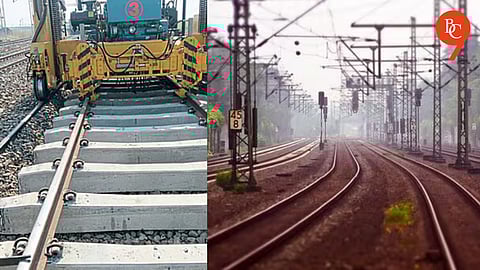
Work is currently underway between Puntamba and Kanhegaon stations under the Pune railway division. The tracks are being replaced using the Plasser Quick Relaying System (PQRS), a modern technique that allows faster execution.
Using this system, railways have already replaced tracks over a nine-kilometre stretch in just 35 days, while keeping train operations running through planned traffic blocks.
Earlier, 52-kg rails were used on this 308-kilometre-long section. These are now being replaced with heavier and stronger 60-kg rails, which reduce track wear and allow higher speeds. At present, passenger trains run at speeds of up to 110 kmph on this route. Once the work is completed, trains will be able to run at speeds of up to 130 kmph.
The stronger rails will also reduce the chances of cracks and rail fractures caused by heavy freight trains. Advanced ultrasonic testing will further help detect faults early, lowering the risk of accidents. With improved track quality, maintenance requirements will reduce, ensuring fewer disruptions to train schedules.
According to railway officials, the new 60-kg rails with 90 UTS (Ultimate Tensile Strength) and 550 GMT capacity will easily handle heavy freight loads while enhancing overall safety.
This upgrade will ensure that the Pune–Manmad route does not require major track replacement for at least the next 15 to 20 years, benefiting both passengers and freight operations in the long term.
