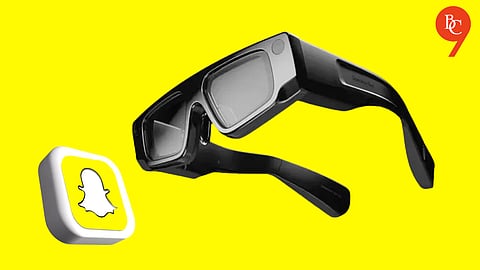


Snap is about to enter the augmented reality wearables race, as Snapchat’s parent company gears up to launch its highly anticipated “Spectacles” AR glasses later this year, according to Alex Heath’s Sources newsletter. This initiative aligns with Snap’s broader strategy to maintain a competitive edge in the rapidly evolving augmented reality market.
Snap has announced that it will deliver a keynote address at the Augmented World Expo (AWE) in June. The event may serve as a prime venue for the company to introduce its refreshed hardware lineup, potentially featuring the latest Spectacles AR glasses.
Snap’s Spectacles are built specifically for augmented reality, allowing users to place virtual objects directly into physical spaces. Unlike Meta and Google’s more heads-up-display-style devices, they aim to offer a more immersive AR experience. Earlier reports suggest a price of around $2,500.
Snap’s latest standalone AR glasses, powered by Snap OS, deliver a fully see-through augmented reality experience with hands-free interaction, gesture control, and voice commands for seamless use of digital objects in the real world.
Key features:
Display & optics: LCoS micro-projectors with waveguides, 46° field of view, and 37 pixels-per-degree resolution
Adaptive visuals: Lenses adjust to lighting conditions for clear overlays even in sunlight
Processing: Dual Qualcomm Snapdragon chips with titanium vapor cooling
Tracking: Four cameras enable spatial awareness, hand and world tracking via Snap’s Spatial Engine
Software: Snap OS enables natural interaction with digital objects using gestures and touch
Shared experiences: Multiplayer AR via Niantic Spatial VPS integration
Battery: Around 45 minutes of untethered use, with external battery pack support
AI Features: Multimodal AI support for real-time translation, environmental scanning, and Q&A
If the current timelines stay on track, Snap’s Spectacles AR glasses could arrive significantly earlier than Google’s Android XR lineup. Google is aiming for a fall 2026 launch for its first audio-focused XR glasses, with a display-enabled version expected in 2027, while XREAL is also planning to roll out its Android XR glasses by the end of this year. In contrast, Meta has already made its move with the $800 Ray-Ban Display glasses.
